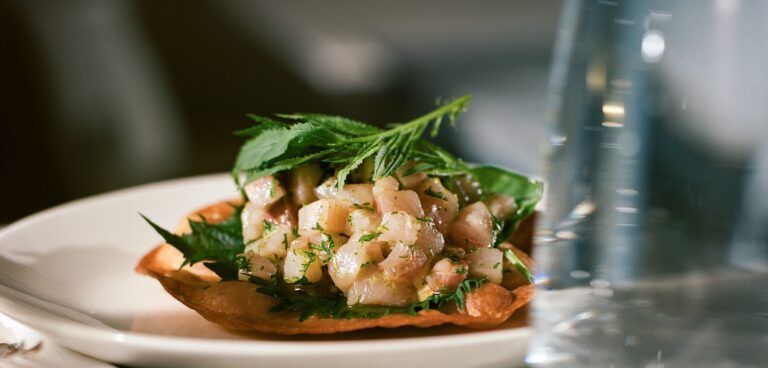
In an era where climate change poses unprecedented challenges to global food security, the seafood industry faces significant threats from rising ocean temperatures, acidification, and unpredictable weather patterns. These environmental shifts disrupt wild fish stocks and traditional aquaculture operations, leading to volatility in supply and concerns over sustainability. As these challenges intensify, there is a growing need for innovative solutions that can ensure consistent seafood production while mitigating environmental impacts. The Kingfish Company’s Yellowtail, a premium fish farmed using innovative Recirculating Aquaculture Systems (RAS) that provide a climate-controlled environment, insulating seafood production from external environmental fluctuations.
The Climate Change Challenge in Seafood Production
Climate change has far-reaching effects on marine ecosystems. Rising ocean temperatures can alter fish migration patterns, reduce oxygen levels, and disrupt breeding cycles. Ocean acidification, resulting from increased carbon dioxide absorption, affects shellfish and coral reefs, which are crucial habitats for many marine species. Additionally, extreme weather events, such as hurricanes and typhoons, can damage aquaculture infrastructure and impact wild fisheries. According to the Intergovernmental Panel on Climate Change (IPCC), these factors contribute to the decline of global fish stocks and pose risks to the livelihoods of communities dependent on fishing¹.1.
Traditional aquaculture operations, especially those in open waters, are vulnerable to these environmental changes. Fluctuations in temperature, salinity, and water quality can lead to increased disease outbreaks and reduced growth rates, affecting both the quantity and quality of the seafood produced.
RAS Farming: A Climate-Controlled Solution
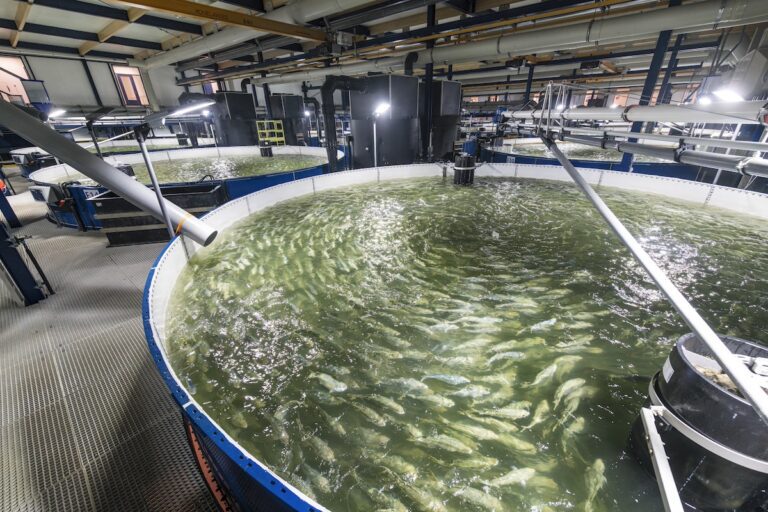
The Kingfish Company has embraced Recirculating Aquaculture Systems (RAS) to cultivate their Yellowtail Kingfish, setting a new standard in climate-resilient aquaculture. RAS farming involves raising fish in land-based facilities where environmental conditions are meticulously controlled. This closed-loop system allows for precise regulation of water temperature, oxygen levels, pH, and other critical parameters, independent of external weather and climate conditions.
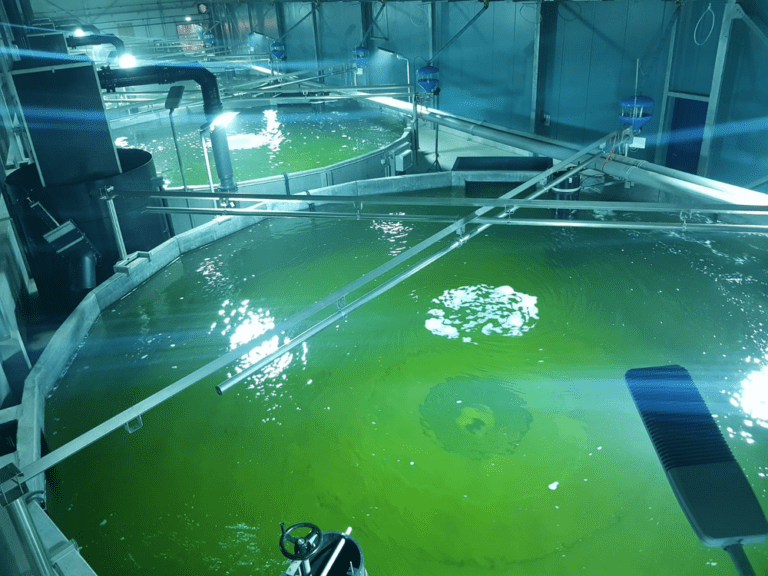
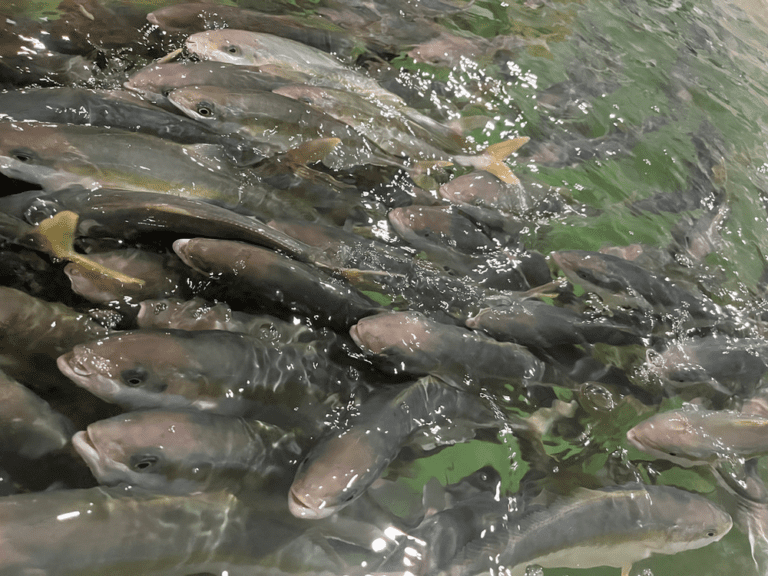
Round tanks of green-lit water under steel rails and pipework, and yellowtail at the surface of a tank.
Technologies Employed in RAS Facilities
- Temperature Regulation: Temperature Regulation: Advanced heating and cooling systems maintain optimal water temperatures for Yellowtail growth year-round. This ensures consistent growth rates and fish health, unaffected by seasonal or climate-induced temperature fluctuations. Excess heat generated during the summer months is stored in the ground, at 70-100 meters sub-surface. During the winter months, this heat is extracted and used to maintain optimal temperatures.
- Oxygenation Systems: Dissolved oxygen levels are crucial for fish metabolism. RAS facilities utilize oxygen generators and diffusers to maintain ideal oxygen concentrations, promoting healthy fish development.
- Water Quality Monitoring: Water Quality Monitoring: Continuous monitoring of water parameters, including pH, salinity, and ammonia levels, is achieved through sophisticated sensors and automation. Real-time data allows for immediate adjustments, preventing stress and disease in the fish population.
- Biofiltration: Biofiltration: Biological filters use beneficial bacteria to convert harmful waste products like ammonia into less toxic substances. This process maintains water quality and reduces the risk of disease outbreaks.
- Backup Systems: Redundant systems for power supply, oxygenation, and filtration ensure uninterrupted operation, even during external power outages or disasters.
- Wastewater Management: Wastewater Management: Advanced wastewater treatment systems are integral to RAS operations, ensuring sustainability and compliance with environmental regulations. Mechanical filters remove solids, while biofilters process dissolved organic waste. Additionally, systems for nitrogen removal, such as denitrification reactors, convert nitrates into nitrogen gas, which is harmlessly released into the atmosphere. This minimizes the environmental impact of effluents and ensures that water discharged from RAS facilities meets stringent environmental standards
Sustainability at the Forefront
By utilizing RAS technology, The Kingfish Company significantly reduces its environmental footprint:
- Water Conservation: RAS farming recycles up to 99% of the water used, minimizing the demand on freshwater resources. Even more so, as Kingfish is a saline species, it is a protein source that does not require fresh water at all.
- Reduced Environmental Impact: Land-based operations prevent waste discharge into natural water bodies, protecting local ecosystems from pollution.
- Energy Efficiency: Energy Efficiency: While RAS facilities require energy for operation, The Kingfish Company invests in energy-efficient equipment and explores renewable energy sources to offset consumption. The farm is equipped with solar panels and The Kingfish Company has a 20% stake in the wind turbines located on site.
- Biosecurity Measures: Controlled environments reduce the risk of disease introduction from external sources, and eliminate the need for antibiotics or medicinal treatments.
A Reliable Choice for Chefs and Distributors
For chefs and distributors, consistency and reliability in seafood supply are paramount. Climate change-induced disruptions can lead to supply shortages and quality issues, affecting menu planning and customer satisfaction. The Kingfish Company’s RAS-grown Yellowtail offers:
- Year-Round Availability: Climate-controlled facilities ensure steady production regardless of external weather conditions, providing a consistent supply to meet market demand.
- Harvest on demand: Harvest on demand: While traditional fishing methods rely on boats going out to sea for their catch, The kingfish Company is able to harvest on demand. Thereby being able to supply fresh fish on demand, on a daily basis.
- Quality Assurance: Controlled rearing conditions result in high-quality fish with optimal texture and taste, meeting the exacting standards of culinary professionals.
- Traceability: Transparent operations allow for full traceability from hatchery to harvest, giving chefs and distributors confidence in the product’s origin and handling.
Making Informed Seafood Choices
As climate change continues to impact traditional seafood sources, making informed choices becomes crucial for sustainability and business resilience. The Kingfish Company stands at the forefront of addressing these challenges through innovative aquaculture practices. By leveraging advanced RAS technology, they provide a product that not only meets the highest quality standards but also embodies a commitment to environmental responsibility.
In a world facing environmental uncertainty, selecting seafood like The Kingfish Company’s Yellowtail is a proactive step towards ensuring the future of seafood production. It’s a choice that supports innovation, promotes sustainability, and guarantees that what ends up on our plates is both exceptional and responsibly sourced.
Discover how climate-resilient aquaculture can secure your seafood supply. Choose The Kingfish Company’s Yellowtail for a dependable and sustainable seafood experience.
Delivered in 24–48 hours
Fresh from our farm in the Netherlands to premium kitchens across Europe, the UK and the Middle East. Tell us a little about you and we will be in touch.
Start an inquiry